
1998: The Toll Keeper Story : DEVLOG#3 – Crafting Animation and Nostalgia
DEVLOG#3 – Crafting Animation and Nostalgia
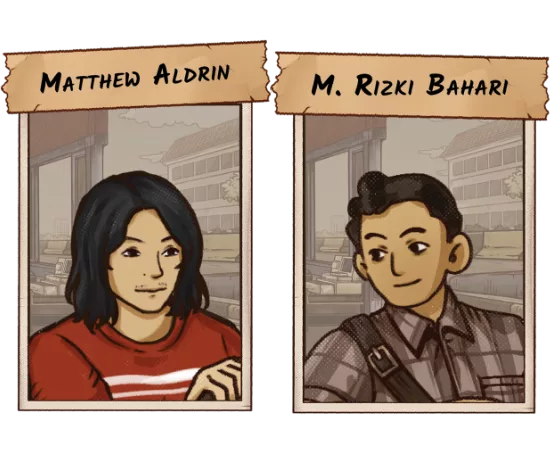
In this Devlog, Matthew (Animator) will be talking about how we developed the animation for 1998: The Toll Keeper Story, and Rizki (Visual Artist) will discuss the process of creating environments and vehicles that you interact with in the game.
Choppy Frames and Old Inspirations
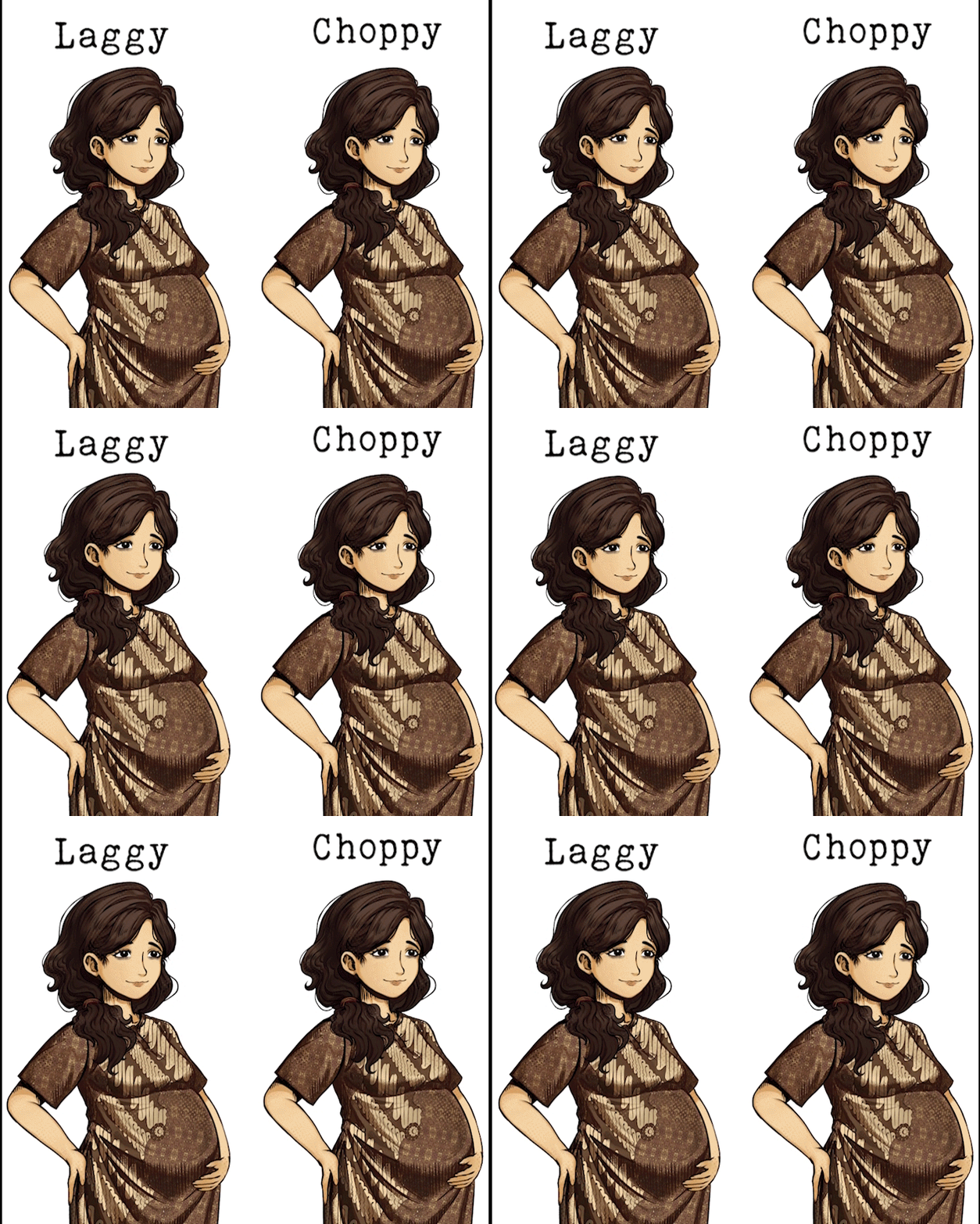
With the theme and setting for 1998: The Toll Keeper Story, the artists created some lovely art inspired by the quirks of the era’s visual style. So as the animator, I also had to find a way to invoke some of that 90s quality. We tried several concepts, but one that everyone liked (and was also most feasible) was the idea of restricting our framerate and making things look choppy. So, we set a rule that our animations should run at 6fps.
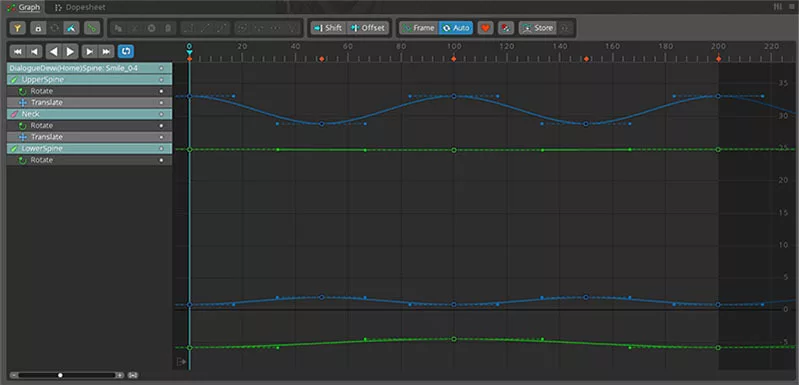
One of the earliest issues we faced was creating a guide for animations so our pipeline could run smoothly – the clearer and simpler the guide the more streamlined the process. We found out immediately that it wasn’t as simple as animating with curves and graphs and just cutting out frames. With modern programs, animations are automatically smoothed – running at 60fps (or whatever framerate your game would run in).
Smooth Curves
Choppy Curves
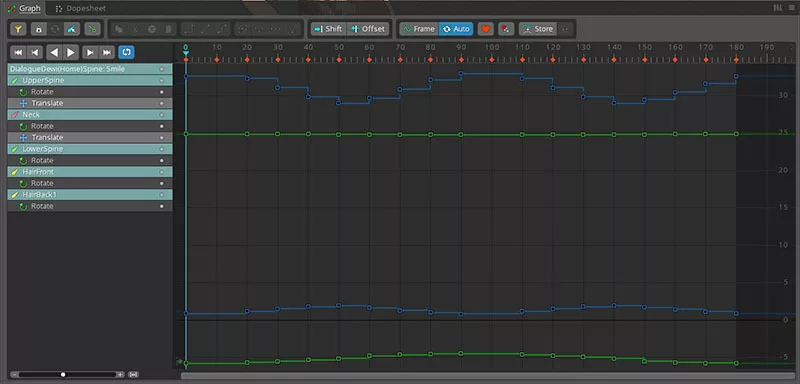
And by simply cutting out the animation frames actually just made the game look laggy. So we realized we had to be more intentional, so I began looking at early examples of Osamu Tezuka, a Japanese animation legend. Tezuka understood how to be efficient with frames when every frame of animation was expensive. I analyzed his works frame by frame to get the sense and timing of his work so we could adapt it into our game. Using more frame holds to create intentional pauses, but blending it with some other smoother actions like hair so it doesn’t feel too jittery.
Tone and Realism
Our previous titles in the My Lovely series were very stylistic and filled with zany characters which allowed us to be very glamorous with our animations. But 1998: The Toll Keeper Story is a very gloomy and grounded game, dialogue between characters are very dramatic and reflect heavy themes. So while still making the characters and world feel lively, we didn’t want overanimation to take away too much from the words and struggles of the characters.
An interesting note I was given by our art director, Raswan, was how a pregnant woman breathes. In the third trimester, the fetus pushes up against the mothers lungs and actually causes shorter breaths. I think visual details like this make the player sympathize with Dewi and her physical struggles and compounds this with her interpersonal struggles.

The Dynamic Environments of Janapa
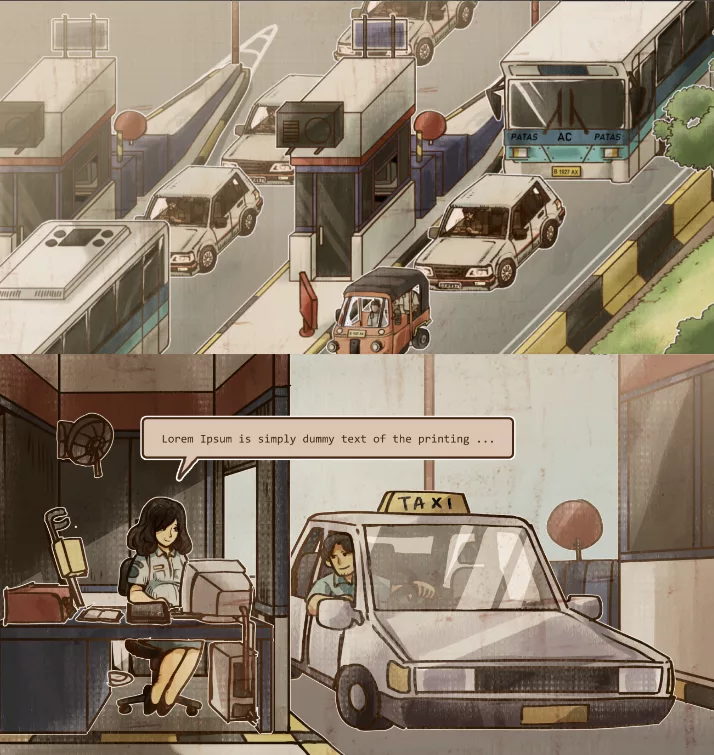
To create the game’s main visual environment, we used references from games of a similar genre. Initially, we considered using an isometric view showing a line of vehicles queuing at a toll booth. We eventually shifted to a side-by-side view, letting players see Dewi and the driver face-to-face, creating more room for expression, conversation, and tension.
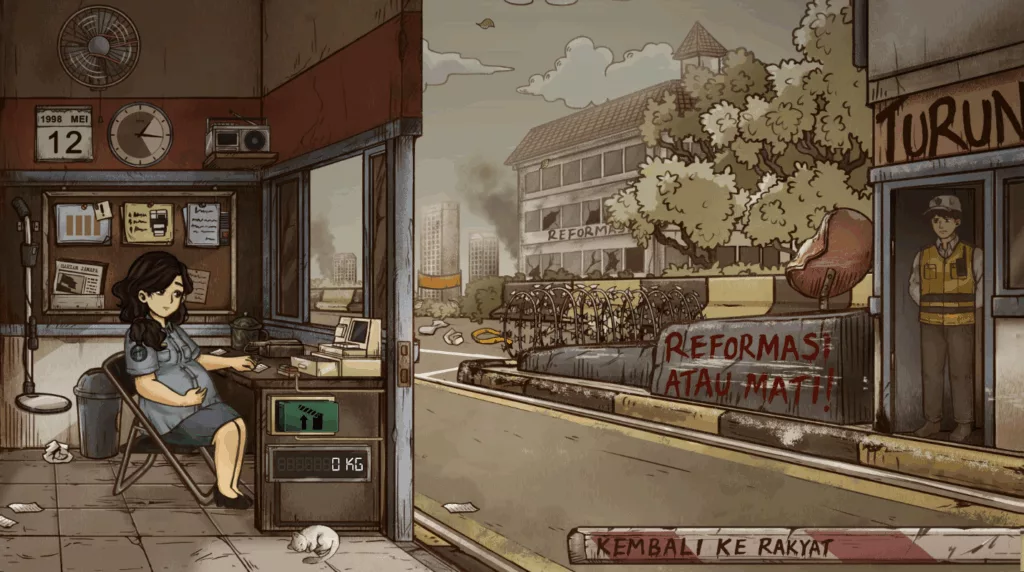
For Rizki, the fun part of working on the assets was how the Dewi toll gate and some passing vehicles are affected by the world situation. As the game progressed, the visuals became increasingly tense, reflecting the worsening situation in Janapa. We built the world of Janapa using the Indonesian language, as reflected in the graffiti, posters, and banners displayed on the buildings next to the toll gate.
Vast Visual Variety of Vintage Vehicles
For vehicles, we took direct references from common vehicles in Indonesia, particularly from the 90s, the game’s setting. The main goal was to instill a strong element of nostalgia. We wanted every passing car, bus, or truck to feel familiar for players who grew up in that era. We incorporated various decorations and stickers, such as witty slogans or decals, that are actually playful parodies of the relevant slogans and advertisements of that era, adding a layer of authentic, localized nostalgia.
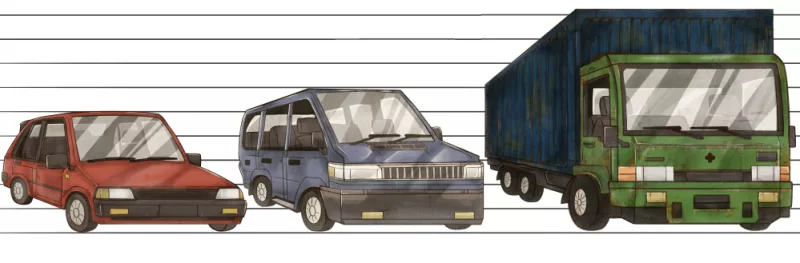
One of the biggest challenges was dealing with the wide range of vehicle sizes on Janapa toll roads. Every day, you see everything from tiny hatchbacks to towering container trucks and double-decker buses. We wanted to capture that variety of vehicles without overcomplicating production.
To handle this, we categorized vehicles into Low, Medium, and High classes. This simple system determined how drivers and props were positioned on the vehicles. High vehicles received their own unique drivers and passengers, while smaller ones could share base templates — keeping production efficient without losing visual variety.
We’ve kept a treasure trove of more detailed visual art concepts in our DLC Artbook . Please check it if you are interested. 🙂
More than an Ad
My favourite thing I worked on in this project was actually our trailers and promotional material. I watched old ads to see the effects of old CRT television, and used that effect to create the setting of the 90s. Then capturing the weight of the game’s story and the ‘action’ of our gameplay felt like creating little short films. It was a delight to show off our game to the public and gauge the public’s reaction to our game; from the very first teaser we rushed to make, to every video we made for our social media. Your reception to our bold idea is what fuels us as game developers to make this the best game we can.
The Strength of 12 Women and Men
With the interns on this project, we had an art and animation team much bigger than any of our previous projects. The management of this team and to steer it in the right direction was no easy task, but you can see the results for yourself now. So we want to thank our talented animation and art interns who helped us bring our creation to life. Developing games can be very time-consuming and without their extra hands on deck we wouldn’t have been able to finish it.