1998: The Toll Keeper Story : DEVLOG #09 – Lessons Learned from ‘Self-Publishing’
DEVLOG #09 – Lessons Learned from 'Self-Publishing'
Hello again!
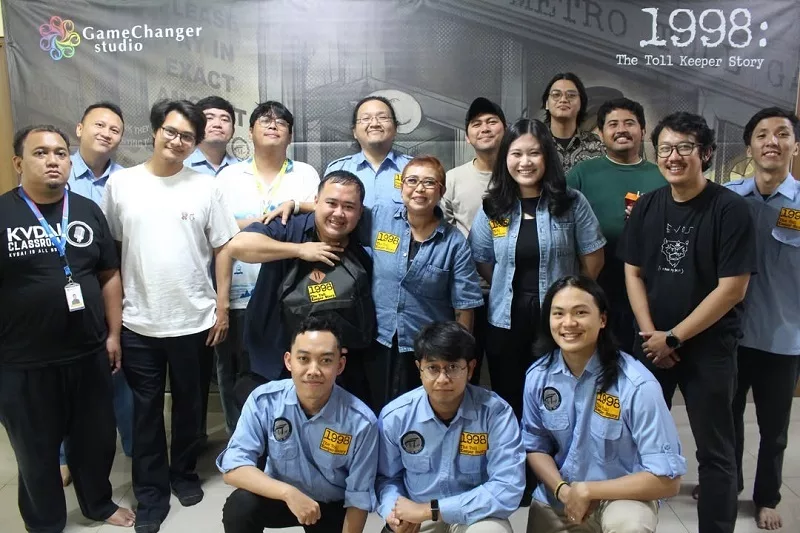
It’s Riris again! Hope you’re not bored of me yet, hehehe… This time, I’ll be sharing why GameChanger Studio, which usually collaborates with publishers, chose to self-publish this time. And what lessons did we learn from that choice, both positive and negative?
The most honest answer is that I was inspired by my frequent chats with Mas Imron from Digital Happiness, the creators of the Dreadout game series. Everything he said really stuck in my head, and I had a strong intention to follow in his footsteps. The other reason, of course, is based on long thought and research that had to be poured into a strategic game development plan.
The main factor was the target market for 1998: The Toll Keeper Story (hereinafter referred to as 1998). With such a specific theme and premise, I had set and prioritized the Indonesian market/gamers from the very beginning. Unfortunately, I couldn’t find valid data on the number of PC/Console gamers specifically in Indonesia. So, I could only rely on asking game developers here and there, whose data obviously isn’t valid to be presented here.
After racking my brain, I finally tried digging into paid data on Gamalytic*, but unfortunately, only 3 games with local themes had data on the percentage of the Indonesian market, as shown in the table below:
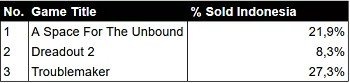
*Estimated data taken from gamalytic in January 2025
This figure naturally became the sales target for creating promotion and marketing strategies in the local market. Regarding this, Dodick has already explained it in this <a class="bb_link" href="
https://store.steampowered.com/news/app/3273530/view/603046131020071951
» target= »_blank » rel= » »>link . The indicator that can be used to achieve that sales target is through wishlists. The image below shows the wishlist position until just before release.
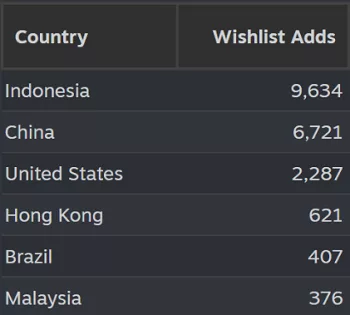
After almost a month since release, below is the sales data for 1998 by country:
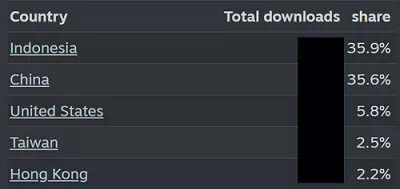
Now, here is the « meaty » part regarding what strategies GameChanger Studio undertook to achieve the percentage figures above?
1) MASS MEDIA!!!
No need to explain what mass media is… The point is, you have to be diligent in making Press Releases (let’s just call them PR) and sending them to media friends. I understand very well that this is still rarely done by Indonesian game studios. First, the content of the PR must be clear regarding the 5W1H (What, Who, When, Where, Why, How). <a class="bb_link" href="
» target= »_blank » rel= » noopener »>This link is an example of the first PR we sent to the media. This is the main weapon for publishers in promoting games, besides participating in online/offline events.
After that, we continued to send PRs whenever there was new information during game development until the game was released.
Regarding mass media, if possible, also conduct a MEDIA PREVIEW. This is a special event inviting a number of media outlets to play the beta version of the game and get criticism and suggestions to polish our game. The mandatory thing to prepare is a media kit containing exclusive merchandise and simple snacks. Not hard, right… 😀
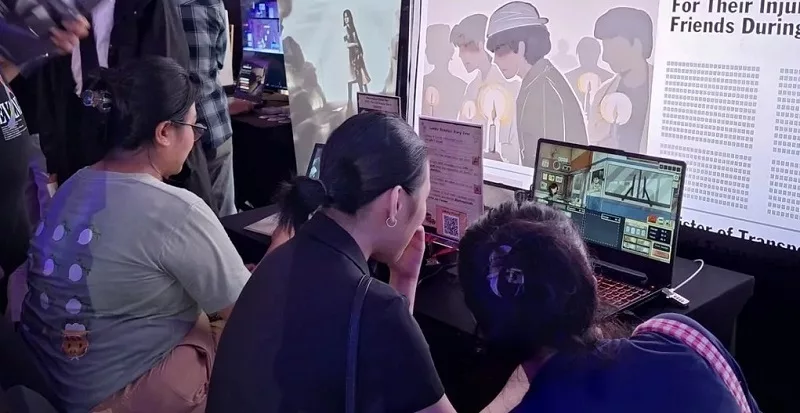
(2) SHOWCASE!!! Players are the main subject for our game. Seeing, observing, and noting them playing our game can only be done if we participate in showcases or B2C events! Follow various social media accounts, KOLs, and event organizers related to games to get information about this. Choose the one most suitable for our game’s target players and try to budget according to our capabilities.
Prepare as much stamina as possible, an eye-catching table display, mini-game activities with prizes, and always take the time to chat with our game players. This part seems to be what will drain our energy and communication skills. But, believe me, this part will be very influential in increasing our game’s wishlist!
3) FINISHED GAME!!!
For this part, of course, I will directly take the example of the game 1998. The word ‘good’ in this section means the game must continue to progress from features to assets. 1998 was developed in less than a year with a core team of 9 people, 6 interns, and 3 freelancers. The first demo version released in July 2025 only contained the first five days (out of a total of 15 days) in the game. Playable features were at 30%.
The second demo at Steam Next Fest in October still contained the first five days, playable features at 50% (although in development it was already 90% complete), more polished visual art, a much more immersive UI, and a more solid story. Well, finally on October 28, 2025, four months after the first demo version was released, the game 1998 was released on Steam and Playstore (as requested by Indonesian players)!
Timing is the ‘big enemy’ that developers must defeat to finish their game. The weapons we had were experience, knowledge, and connections to various parties to be able to keep working on the game and other things related to promotion/marketing, building a community, and still being able to enjoy holidays or weekends.
4) GAME DIRECTOR
Another important thing that friends also need to know is the role of the game director, who must be able to orchestrate all parties (inside/outside the studio), manage pipelines that have deadlines, listen carefully to various criticisms/suggestions (inside/outside the studio), and the most difficult part is setting aside ego to still be able to think logically in critical moments.
Various strategic decisions must be made in a short time that can have good or bad impacts. I experienced this when deciding not to take offers from several publishers. So far, we have only collaborated with CC_Games to publish 1998 in China, Hong Kong, and Taiwan. The results can be seen in the sales image above.
The main weapon I possessed as a first-time game director/narrative designer/writer was humility… to keep trying. Trying to invite Pladidus Santoso, Faza Meonk, and Ruth Christina for collaboration. Trying to make a game with a sensitive theme. Trying organic promotion/marketing. Trying to make a proper press release. Trying to do all the things that publishers usually do.